
Search within:
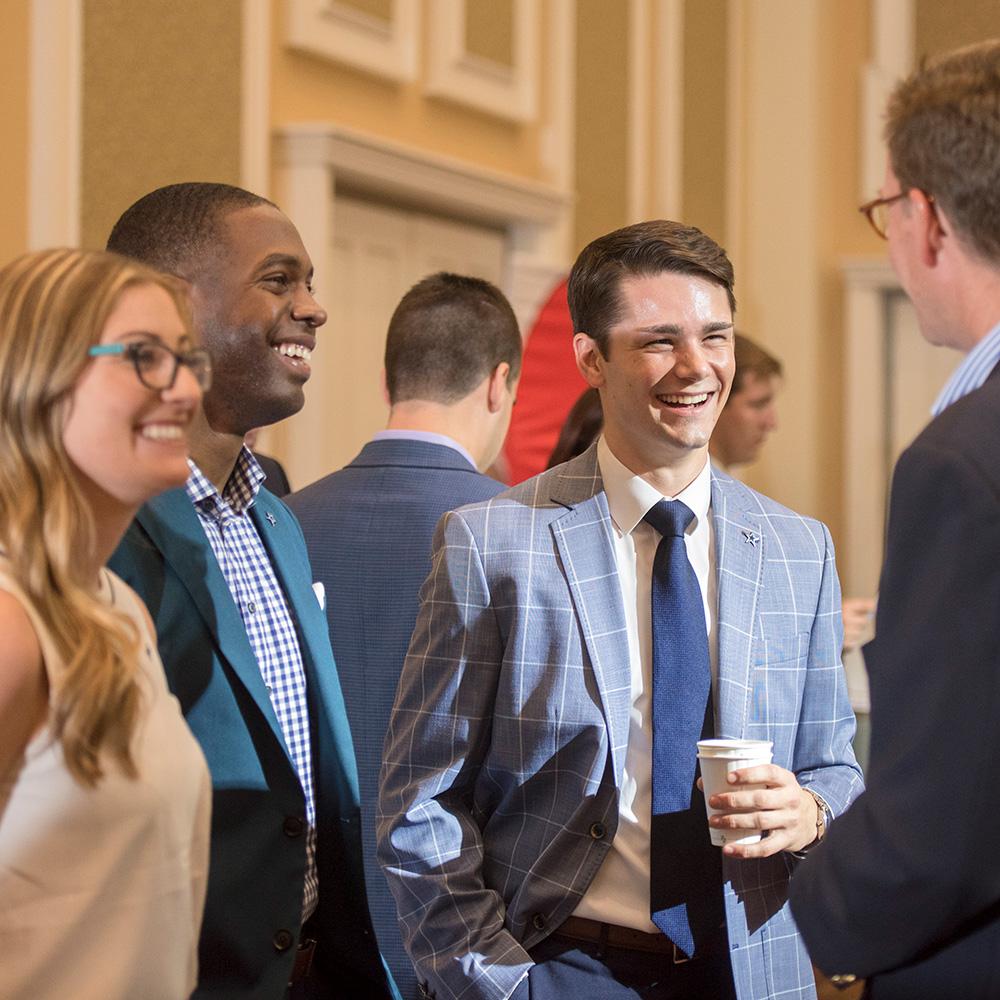
Individuals stand together talking and laughing
Faculty Learning Communities

Faculty Learning Communities

Faculty Learning Communities (FLCs) provide an opportunity for OHIO instructors to collaborate with their peers to explore a topic of interest related to teaching and learning.

Most FLCs include faculty from different disciplines, which helps to foster discussion that includes a broad range of backgrounds and experiences. Learning communities typically meet for a semester or a year, and participants work toward completing goals related to the community topic.

FLC program outcomes include:

  • Contribute to building a University-wide community committed to teaching excellence
  • Increase faculty interest in teaching, learning and assessment
  • Foster scholarly teaching and instructional strategies supporting student academic success
  • Expand evaluation of teaching and/or assessment of learning
  • Increase faculty collaboration across disciplines
  • Encourage reflection on teaching practice

Learn more about FLCs

What Are FLCs? | Deliverables | Facilitating an FLC | Recommendations for Facilitators | Proposing an FLC | Past Topics

2026-27 Faculty Learning Communities

  • Fall 2026 -- Leading and Teaching Continuous Improvement


    Facilitator: Marci Shepard, assistant professor of instruction, Educational Studies - Educational Leadership

    This FLC is designed for faculty, administrators, and staff across disciplines who are interested in improving their own practice, supporting improvement efforts in their units, or teaching improvement to students.

    During four 60-minute online sessions (via Teams) in Fall 2026, participants will engage with practical improvement science methods. Whether you are new to improvement or have prior experience, you will leave with a structured process and over 30 adaptable tools to support real-world application and teaching.

    Through this interdisciplinary partnership, this community will experience improvement as an inclusive, place-based, human-centered process that builds positive culture and transforms systems for better outcomes.

  • Fall 2026 -- Planting the OHIO SEED: Integrating Sustainability Across the Curriculum


    Facilitator: Kyle Butler, professor of instruction and Sustainable Living Hub coordinato, OPIE/Office of Sustainability

    Coordinator: Joshua Osondu, Ph.D. candidate in Educational Studies and Sustainable Living Hub graduate assistant

    Sustainability challenges are often described as “wicked problems” in part because they cannot be solved by a single discipline, institution, or sector but require interdisciplinary knowledge, collaboration, and systems thinking. Addressing these complex challenges requires graduates who can think across disciplines and apply systems-based approaches to problem solving, which itself requires faculty at institutions like OHIO to adopt a Sustainability Across the Curriculum (SAC) approach.  

    In this faculty learning community, participants from diverse disciplines will deepen their own sustainability teaching practice and work collaboratively to develop a framework for SAC that can inform the creation of the OHIO SEED (Sustainability Education and Engagement Development) program, an initiative from the Office of Sustainability that would provide support for faculty across disciplines to integrate sustainability concepts, competencies, and experiential learning opportunities into their courses.

    Topics for collaboration and discussion will include defining sustainability, incorporating sustainability challenges into coursework, key competencies in sustainability, aligning curriculum with the UN Sustainable Development Goals (SDGs), and fostering a sustainability worldview. Participants will also be presented with models of how SAC initiatives have been implemented at other higher education institutions. Through their participation, faculty will deepen the knowledge, skills, and values needed to implement teaching for sustainability in their own courses and for supporting their colleagues who want to do the same.

  • Fall 2026 and Spring 2027: Facilitating Student Career Readiness


    Facilitating Student Career Readiness supports faculty in enhancing their confidence and skills in leading career-related conversations with students. Participants will explore ways to intentionally integrate career readiness into the student experience while collaborating with campus partners engaged in this work at OHIO.

    The 2026–27 FLC will meet monthly (October–April) and includes a faculty stipend upon completion.

    Fall Semester Focus: Career Development Badge Design
    During the fall semester, faculty will design a discipline-specific career development badge that supports students in building career readiness within their academic program. These badges may incorporate a combination of:

    • Curricular experiences
    • Co-curricular and extra-curricular activities
    • Experiential learning opportunities
    • Structured reflection
    • Skill development and assessment

    Faculty will develop a framework that connects these elements to career readiness competencies and outlines how students can meaningfully engage in and demonstrate their learning.

    Spring Semester Focus: Artifact Development and Application
    In the spring semester, faculty will shift their focus to the development of an artifact that demonstrates the value of a degree in their discipline and supports student career readiness. Examples may include:

    • Student outcome narratives or data-informed storytelling
    • Program-specific career pathways or guides
    • Marketing or recruitment materials
    • Classroom or advising tools that facilitate career conversations

    Throughout the year, faculty will:

    • Identify and implement strategies to intentionally engage students in career readiness both in and out of the classroom
    • Review and adapt successful practices from colleagues across disciplines
    • Collaborate with institutional partners to align efforts and maximize impact

    The program is a partnership between the CTLA and Career Services. Facilitators include Aaron Sturgill, executive director, Career Readiness, and Imants Jaunarajs, assistant vice president, Division of Student Affairs.

  • Spring 2027: Delivering Effective and Engaging Online Courses


    Facilitators: Melvina "Mel" Brandau, associate professor, co-director - Nurse Educator Track, School of Nursing

    Sherleena Buchman, associate professor, associate dean of Curriculum and Academic Affairs;  Nurse Educator Track co-director, School of Nursing

    This FLC will focus on evidence-based strategies for effective and engaging online teaching. As online and hybrid learning environments continue to expand, faculty need practical approaches to support student engagement and learning, strengthen instructor presence, and improve the overall quality of online education. 

    The purpose of this FLC is to cultivate a faculty community focused on effective online teaching through the exploration, application, and dissemination of evidence-based, online/distance instructional strategies. 

    The overall goal of this FLC is to enhance the quality of online/hybrid instruction by equipping faculty with practical, research- and experience-informed strategies to improve student engagement, instructor presence, and learning outcomes. 

    Outcomes

    • Design/Revise at least one online or hybrid course component using evidence-based instructional strategies to increase student engagement and learning outcomes.
    • Implement at least two strategies that strengthen instructor presence, feedback, and communication in online/hybrid learning environments.
    • Contribute to dissemination of effective online teaching practices through a CTLA-supported deliverable.
  • Spring 2027: Building a Multidisciplinary Course


    Facilitator: Stephanie Miller, professor of instruction, Biological Sciences

    In Building a Multidisciplinary Course Assignment: Find Your Faculty Collaborator and Innovate!, participants will explore the differences between multidisciplinary and interdisciplinary approaches to education and assignment design. Participants will develop partnerships within this FLC that support the development and implementation of an undergraduate cross-course assignment on Canvas. A multidisciplinary project that can be shared across two courses in the same semester emphasizes student-led learning and provides students with an opportunity of learning through synthesis of knowledge from two or more academic fields, practice in problem solving, critical thinking, and real world collaboration skills.

    Outcomes

    • This FLC will provide a network of willing faculty collaborators who also want to develop a multidisciplinary assignment.
    • Faculty can grow and expand their pedagocial expertise and learn how their course content connects to subject matter their studnets are learning in other courses.
    • Developing a multidisciplinary assignment prodived an opportunity for enhanced learning for undergradaute students, but the complexity of implementing an assignment is challenging for faculty and this FLC could support.
    • Share ideas and logistical assignment design plans for grading, using Canvas, and how to support students through adjusting to a multidisciplinary assigment approach.

2025-26 FLC Facilitators

Career Readiness
Aaron Sturgill
Facilitating Career Readiness

Aaron Sturgill (he/him) is the Executive Director, Career Readiness for the Career Services. He supports students through one-on-one career coaching, career engagement events, and career courses.

Division of Student Affairs
Imants Jaunarajs

Facilitating Career Readiness

Imants Jaunarajs is vice president in the Division of Student Affairs and has lead Career Services, Event Services, Center for Student Engagement & Leadership, and Sorority & Fraternity Life and has over 20 years of progressively responsible leadership in student services.

Patton College of Education
Jennifer Lisy

Alternative Grading: Rethinking Assessment

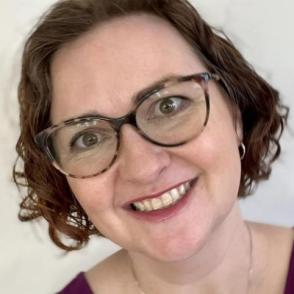
Jen Lisy is a CTLA faculty fellow and assistant professor of instruction in education. She has a passion for finding meaningful ways to incorporate technology into in-person, synchronous, and asynchronous courses. As a teacher, she has worked in diverse school settings: a public school in the Bronx, an affluent private school outside of Chicago, and an Early Reading First Grant serving preschools across Chicago.  Additionally, Jen has conducted technology training nationwide.

College of Arts and Sciences
Yogesh Sinha

Alternative Grading: Rethinking Assessment

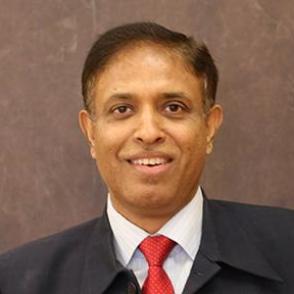
Yogesh Sinha is assistant professor of instruction, English, with primary activities revolving around teaching composition courses ( e.g. Writing and Rhetoric, Writing about Environmental Sustainability, Rhetoric of Wellness). In addition to providing mentorship to graduate students, he also participate in curricular development and evaluation, working in the area of composition studies and scholarship of teaching.

Patton College of Education
Laura Harrison

Character Education Across Disciplines

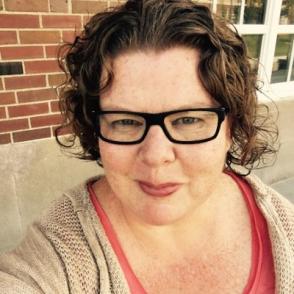
Laura Harrison, who began co-editing the Journal of College and Character last year, with colleague Peter Mather, will lead this FLC. Harrison is an expert in college student mental health and the topic of rehumanizing higher education. She has written 25 peer-reviewed journal articles/book chapters on these topics in addition to 5 books: Helping College Students Write: A Guide for Educators (Routledge, 2024), Teaching Struggling Students: Lessons Learned from Both Sides of the Classroom (Palgrave Macmillan, 2019), Interrupting Class Inequality in Higher Education: Leadership for an Equitable Future (Routledge, 2017), Alternative Solutions to Higher Education’s Problems: An Appreciative Approach to Reform (Routledge, 2015) and Advancing Social Justice: Tools, Pedagogies, and Strategies to Transform Your Campus (Jossey-Bass, 2013). 

Patton College of Education
Pete Mather

Character Education Across Disciplines

Mather is an expert in positive psychology, appreciative inquiry, and strengths-based education. He edits the Journal of College and Character with FLC co-facilitator Laura Harrison. Mather teaches courses in Service Learning in Higher Education, Student Development Theory, Campus Environments, and the History and Philosophy of American Higher Education. His major research interests include service learning student and faculty outcomes, the application of positive psychology in higher education, and general student affairs practice.
 

2024-25 FLC Facilitators

College of Arts and Sciences
Rebecca "Becky" Challenger
Assistant Director, Academic Coordinator, & Professor of Instruction in Ohio Program of Intensive English

Facilitator for Helping College Students Write.

College of Arts and Sciences
Muriel Gallego

Associate Professor of Spanish

Facilitator for Justice-oriented Pedagogies of the Global North and Global South.

Patton College of Education
Laura Harrison

Department Chair, Counseling and Higher Education, and Professor

Facilitator for Helping College Students Write.

Office of the Provost
Katie Hartman

Vice Provost, Faculty Affairs

Facilitator for the Community of Practice Affective Domain.

College of Business
Brian Hoyt

Professor, Management, Lancaster Campus

Facilitator for Collaborative Learning: Building Student Engagement with Peer Feedback.

College of Arts and Sciences
Uzoma Miller

Assistant Professor of Instruction, Department of African-American Studies

Co-facilitator for Cultivating Inclusive Wellness Pedagogies.

College of Arts and Sciences
Yogesh Sinha

Assistant Professor of Instruction, Department of English

Co-facilitator for Cultivating Inclusive Wellness Pedagogies.

More Information About Faculty Learning Communities

Eager to learn more about FLCs? This section provides in-depth information about FLCs, including: what it's like to participate, who can facilitate or lead an FLC and facilitator responsibilities, how to propose an FLC, possible deliverables, recommendations for facilitators and past FLCs.

What Are Faculty Learning Communities?

A Center for Teaching, Learning and Assessment (CTLA) Faculty Learning Community (FLC) comprises a small group of instructors who investigate and provide solutions for just about any teaching, learning and assessment problem or opportunity.  

FLCs can be organized by cohort or topic. Cohort FLCs address teaching, learning, and assessment development specific to a cohort of instructors. For example, those teaching in STEM disciplines, Graduate Student Instructors or faculty teaching large-enrollment courses. Topic-based FLCs focus on a theme like game-based learning, teaching with a global perspective or implementing reflective practice.

FLCs generally comprise eight to 12 instructors. FLCs meet synchronously (face-to-face or online) a minimum of four sessions over a semester and engage in activities and topical conversations.

FLC facilitators work with participants to determine the meeting schedule and help set the group’s goals. Previous OHIO FLCs have focused on topics such as teaching challenges, Team-Based Learning strategies and global perspectives in diverse classrooms.

Possible Deliverables Following FLC Participation

The CTLA asks FLC members share their findings with the OHIO community and/or at conferences.

The following are possible deliverables:

  • Development of a CTLA digital resource page
  • A LMS module
  • Blog posts
  • Podcast episode(s)
  • Conference presentation (Spotlight on Learning, symposia, etc.)
  • A white paper to be shared on the CTLA website

Who Can Facilitate or Lead an FLC and What Are the Responsibilities?

Full-time faculty (instructional, tenure-track and clinical), as well as staff dedicated to leading instructional support and with pedagogical expertise related to teaching, learning and/or assessment may serve as facilitators. Small stipends are available for facilitators and completing participants.

Facilitators are responsible for:

  • Identifying resources (texts, articles, digital materials, etc.) to support the FLC
  • Setting FLC meeting dates, times and locations/modalities
  • Establishing agendas and activities for each FLC meeting (a minimum of 4)
  • Sending meeting reminders and updates to participants and tracking participation
  • Working with the CTLA Associate Director for Faculty Programming to identify assessment and evaluation processes and collect artifacts or reflections from FLC members
  • Working with the CTLA Associate Director for Faculty Programming to submit a final FLC report to the CTLA

Recommendations for FLC Facilitators

The CTLA offers recommendations to ensure FLCs offer a meaningful experience for participants and facilitators:

  • Limit your FLC to 12 to 15.
  • Make FLC membership voluntary; develop an interest form with the CTLA Associate Director for Faculty Programming.
  • Consider bringing in OHIO expert resources in the form of FLC affiliates. Affiliates may include librarians, technologists and consultants who can attend meetings at the group's invitation.
  • Select applicants for diverse FLC membership: Consider each candidate's campus role, rank, experience and whether they have a multidisciplinary background. Three reasons for these considerations: participant curiosity, robust innovations and broadened perspectives.
  • Schedule the FLC for one semester with a second semester possible for deeper dives and/or exploration. Identify meeting times before the first meeting using a meeting platform or Outlook, as well as teaching schedules, to guide selection.  
  • Build in community building activities and ways for FLC members to socialize at each meeting.  
  • Allow members, with the facilitator, to refine outcomes, meeting topics and procedures.
  • Focus on obtaining and maintaining FLC member commitment. Plan productive meetings. Note progress made, outcomes to be achieved, and deliverable dates if applicable.
  • Consider assessing 3 areas of the FLC's impact: member development, student learning and/or effectiveness of the FLC's innovation, and value of FLC approaches engaged.
  • Focus on evidence-based, scholarly approaches.

Proposing an FLC

CTLA encourages instructors and staff with instructional expertise to consider developing and leading an FLC. Those facilitators are encouraged to think creatively and to determine the best approaches to meeting goals and outcomes identified for the FLC.

CTLA accepts FLC proposals on an ongoing basis, but review deadlines are set Oct. 15 in the fall and March 15 in the spring. CTLA offers small stipends for facilitators and up to 12 participants and is also able to provide some administrative and communications support.

FLC Proposal

To propose an FLC, complete the online form. In the form, you will be asked to complete and submit information related to your proposed FLC topic:

  • Proposed FLC Title: We recommend a name that clearly indicates theme and may create interest in the learning community.
  • FLC Short Description: A summary of the proposed FLC’s overarching goal, content, format, focus, and/or purpose. (Maximum 250 words.)  
  • Anticipated FLC Outcomes: What do you want the faculty to know, be able to do and/or value as a result of their participation in the FLC. (5 maximum)  
  • Delivery modality
  • FLC Session Descriptions: Briefly describe the focus of and activities associated with each planned session (4 required). We understand that the design may be revised during further development of the FLC.
  • FLC Materials: List specific reference materials (e.g., book titles, journal article references, videos, guest speakers) you will or may use to design or deliver the FLC. We understand this list may change as your planning progresses.
  • Assessment: Describe how you plan to assess the impact or effectiveness of this FLC? How will you know the goal and outcomes have been met? (250 words maximum)

Submit a Proposal

Past FLCs

To help you gain a better understanding of FLC topics and potentially inspire the creation of new FLCs, explore previous FLC topics and their descriptions.

  • Justice-oriented Pedagogies and Language Use in the Global North and the Global South sought to create an international, inter-institutional collaborative space to explore critical justice-oriented pedagogies. (Spring 2025)
  • Helping College Students Write was grounded in the scholarship on writing pedagogy and the facilitators’ lived experience as faculty, dissertation chair and writing coach. This FLC offered participants resources appropriate for an increasingly culturally and linguistically diverse student population. (Spring 2025)
  • The Affective Domain Community of Practice focused on teaching, learning, and assessment (TLA) associated with the Affective Domain of Bloom’s Taxonomy. The aim of the CoP was to bring together faculty from a variety of disciplines to collaborate on interdisciplinary affective TLA projects. (AY 2024-25)
  • Cultivating Inclusive Wellness Pedagogies -- This FLC created a collaborative space for faculty members to explore the intersection of wellness and pedagogy with the key objective of empowering participants to integrate holistic wellness practices into their teaching methodologies. (Fall 2024)
  • AI and Teaching and Learning in Higher Education -- This FLC explored current developments in higher education and ChatGPT/AI, instructional concerns and strategies for leveraging or mitigating the impact of this ever-evolving technology, including development of course policies, assignments and assessments. (Spring 2023, Fall 2023, Spring 2024)
  • Teaching Excellence on Regional Campuses -- The nature of regional campus instruction at OHIO has shifted. This group reviewed the unique situation of teaching and learning in the regional system and provided productive feedback about ways to ensure high-quality, effective teaching given the current context. (Offered across Fall 2023 and Spring 2024)
  • Digital Game-based learning for Experiential Education -- This FLC considered how video games facilitate experiential learning and what adaptations must be made to current teaching practices to fully leverage digital game-based learning. Participants engaged with video games as both text in hands-on activities, as well as theoretically, to understand video games as a literacy. (Spring 2023)
  • Facilitating Student Career Development – This FLC helped faculty identify opportunities for enhancing confidence and skills in leading career-related conversations with students in any discipline. Participants identified strategies to engage students in career planning and career development discussions both in and out of the classroom. (Year: 2020)
  • Teaching with a Global Perspective – This interdisciplinary FLC focused on how to better create classroom environments and learning experiences that help students become global citizens. The group explored and addressed issues encountered when assessing and redeveloping a course from a global perspective. (Year: 2019)
  • Large-Enrollment Course FLC – This FLC focused on supporting instructors who taught courses with high enrollment — either one or more sections of the same course with a total enrollment of 100 or more students in one term. (Year: 2018)
  • Reflective Practice FLC – In this FLC, faculty reflected on their teaching and learning practices and scholarship. Their theme was: “How do faculty create a more engaging classroom for today’s university students? (Year: 2017)
  • Start an FLC

    The Center for Teaching, Learning, and Assessment accepts proposals for Faculty Learning Communities on a rolling basis and offers three to four FLCs each academic year. Faculty are invited to submit a proposal via the online form

    Proposals include information about facilitators, as well as the following: a summary of the proposed FLC’s overarching goal, content, format, focus, and/or purpose; anticipated FLC outcomes; FLC session descriptions; anticipated FLC materials; and description of how you plan to assess the impact or effectiveness of this FLC.

  • FLC Questions

    Question mark icon

    Have questions about FLCs or need more information about participating, facilitating or submitting a proposal? Send an email to the CTLA.